
Make the arithmetic visible
Our Life Path calculation adds all digits of the full birth date, then reduces the sum. An optional setting retains 11, 22 and 33. For example, 17 September 1950 gives 1+7+0+9+1+9+5+0 = 32, then 3+2 = 5. The birthday number is a different operation using the day of the month: 17 reduces to 8. A clear result labels those two numbers separately rather than using the name destiny for several incompatible calculations.
Master-number conventions can change the answer
Some schools reduce components separately before combining them; others add all digits first. They may also retain master numbers at different stages. That can explain a disagreement even when everyone copied the date correctly. getVEDANGA states its all-digits method and shows the reduction steps. Keeping a number such as 22 is a convention of a numerological school, not evidence that one person has a higher status or a more important life than someone whose number reduces further.
Treat meanings as optional prompts
Themes such as initiative, cooperation, expression, structure or care are broad symbolic associations. They are not measurements of ability and do not establish a fixed identity. A reader can use a theme to ask a practical question, such as where a routine could be more flexible, without concluding that an entire personality has been explained. If a description does not fit, there is no obligation to reinterpret life until it does. The calculator’s reproducible arithmetic and its interpretive language have different evidential status.
Do not blend the date and name systems
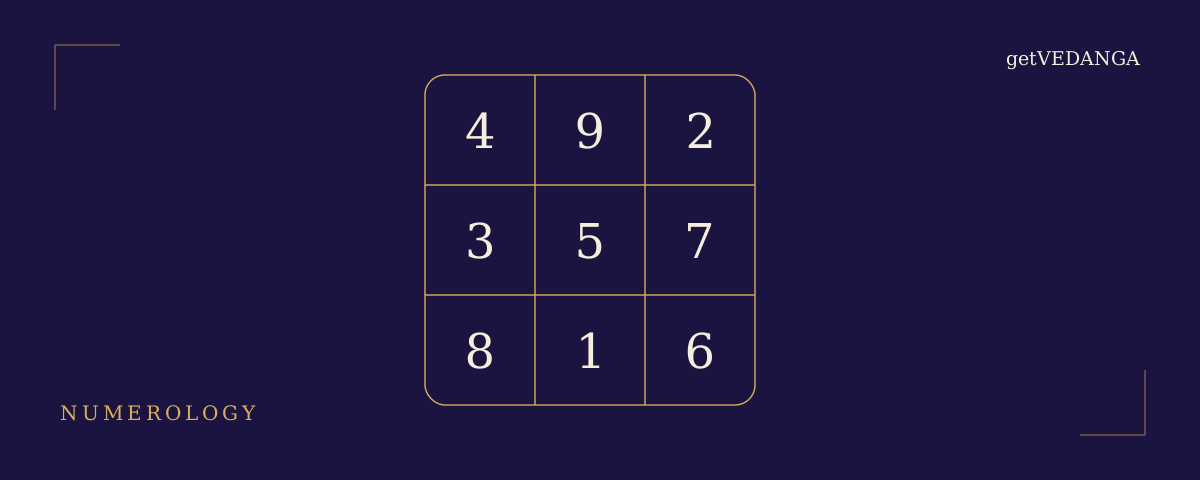
A Chaldean name number uses letter values from a Roman spelling, whereas a Life Path uses a date. Changing a transliteration can change the former without changing the latter. A Lo Shu grid is yet another representation, based on digit counts. Showing all three can be educational if each method is labelled and explained. It is less useful when a website combines them into a single unexplained claim about success, compatibility or a person’s future.
The nine themes, read modestly
A common set of associations links 1 with initiative, 2 with cooperation, 3 with expression, 4 with structure, 5 with adaptability, 6 with care, 7 with inquiry, 8 with organisation and 9 with compassion. These concise themes are a vocabulary for reflection, not a validated personality scale. Someone with a different number can show any of those qualities. The purpose of listing them is to make the convention understandable, not to divide people into rigid types or tell them which work or relationships they should choose.
An example of a useful prompt
If the number 4 brings up structure, a modest question is which routine is helping and which has become too rigid. The answer comes from the person’s actual experience, not from the arithmetic. There is no need to interpret every organised person as confirmation or every disorganised moment as a hidden shadow. A useful reflection can end with one practical observation. It need not become an elaborate explanation of an entire life, and it does not require changing a name or paying for a correction.
Try a small learning exercise
Write the full date and keep the intermediate sum before reducing it. Calculate the birthday number separately. If you add a name, write each Roman letter and its Chaldean value rather than skipping straight to the final number. Finally place the nonzero date digits in the Lo Shu arrangement and count the repetitions. You now have three distinct outputs from clearly different operations. If a symbolic meaning is interesting, use it as an optional question; do not treat agreement between the outputs as independent scientific confirmation.
The method used on this site
The date calculation sums all birth-date digits and optionally retains 11, 22 and 33. Chaldean names use a fixed A–Z mapping from 1 to 8, then reduce the compound sum. Lo Shu places nonzero date digits into a fixed 3×3 arrangement. These are symbolic traditions, not scientific personality tests.
Frequently asked questions
Can spelling change a name number?
Yes. The Chaldean calculation uses the letters entered. Different Roman spellings or transliterations can change the sum without changing a date-based Life Path.
Does a missing Lo Shu digit identify a personal flaw?
No. It states that the digit is absent from the chosen date representation. A symbolic interpretation is not a scientific personality assessment.
Where can I check the calculation used here?
Open the related Free Numerology Calculator tool and its explanation, then compare the settings with the methodology page. The calculation and its traditional interpretation should not be treated as the same kind of claim.
Is this medical, legal or financial advice?
No. The journal explains cultural and symbolic frameworks. A horoscope, numerological pattern or card draw should not replace appropriate practical evidence or professional help.
Sources and further context
Sources have different roles: astronomical documentation supports the calculation, while traditional texts describe a historical framework. A citation does not by itself validate a personal prediction.
Astrology is offered for reflection and cultural interest, not as medical, legal or financial advice. How we work →